Tehreek Taliban Pakistan (TTP), as a group, was formed in 2007 following Pakistan’s security
operation against militants in Lal Masjid, Islamabad. The operation left resentment among some
religious armed groups in Pakistan, especially in Khyber Pakhtunkhwa (KP) province. These
armed groups started series of attacks against military and civilians, which kicked started one of
the largest insurgency chapters in Pakistan’s history.
TTP, between 2007 and 2009, reached its zenith point, where much of Federally Administered
Tribal Areas (FATA) and Malakand region was under their control, plus with considerable
influence in Lekki Marwat, D.I Khan and Banu. In simple terms, half of KP province was under
their control, but their harsh interpretation of Shariah made them highly unpopular among the
masses, which led to a lot of local Lashkars being formed to support military operations against
TTP, resulting in massive civilian displacement and horrific incidents in KP province.
Some major operations, like Operation Rah-e-Rast and Zarb-e-Azb, saw TTP being pushed out
of their strongholds of Swat and North Waziristan. Many militants were killed, and a lot were
pushed to seek refuge in Afghanistan. From time period of 2014 to 2019, Pakistan continued to
experience fall in insurgency across four provinces, but following Doha agreement and departure
of USA from Afghanistan, TTP, which originally helped Afghan Taliban to topple Ghani govt.
and US in Kabul, found support from the new govt. in Kabul.
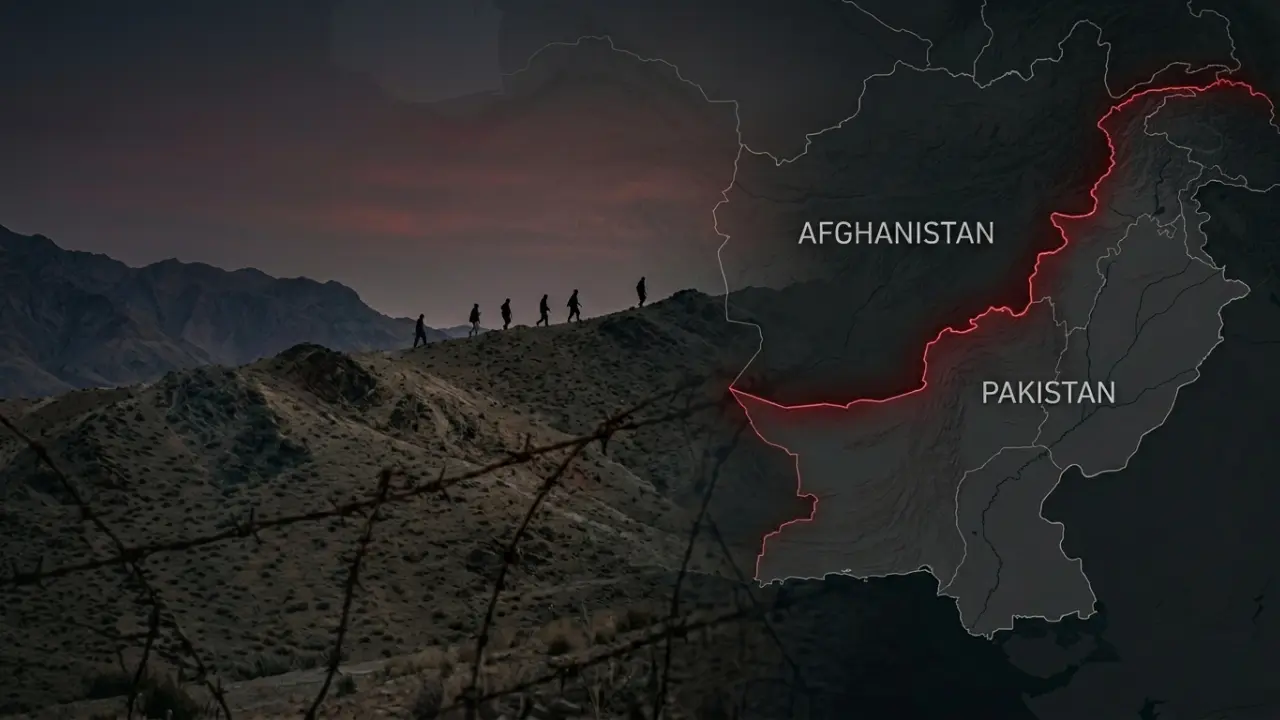
Since Afghan Taliban saw TTP as allies, their refusal was clear of handing over TTP leaders and
fighters as per Pakistan’s demand. This led to TTP using the highly porous Durand Line at its
advantage and moving across from Afghanistan as far as D.I. Khan. Several videos shared by
pro-Taliban accounts, after clashes with Pakistan, show them removing fences on Durand Line,
which would only enable TTP further into their cross-border maneuvering. Lately, after the
arrival of new TTP’s emir, Mufti Noor Wali Mehsud, in 2018, the group is trying to merge old
splinter groups which broke away from TTP following successive military’s operations in 2010s.
Under the new emir’s order, there has been a decrease in attacks in heavily populated areas,
unlike which was pretty common back during previous TTP’s emirs. This, plus TTP’s
propaganda news reports, are mixing more of an ethnic tone with its religious tone, especially
when it comes to affected areas of KP province due to two decades of fighting. This is obviously
a move on their part to improve TTP’s image.
This could prove alarming for the state, as it could pave the way for return to the 2007–10 era,
where TTP’s attacks shook the Pakistani society to its core. Maybe we already are witnessing a
return to that period. The 2026 Global Terrorism Index compiled the data for all the attacks that
took place globally in the year of 2025, and the report placed Pakistan as the worst hit by
militancy; even a war-torn nation of Afghanistan was placed at 11th ranking.
Pakistan seriously needs to reconsider its approach when it comes to the new form of militancy
TTP is waging and engagement their with Afghan Taliban. Countries adapt themselves to new
challenges by coming with new solutions. Pakistan was presented with challenges in early 2000s
with the formation of TTP; it strongly dealt with it by adapting to guerilla warfare and countering
their ideology. Now TTP has changed their tactics—how will now Pakistan react to it?